Here’s a great recipe that’s easy enough for dinner any night of the week, and fancy enough that you’ll get rave reviews on a special occasion.
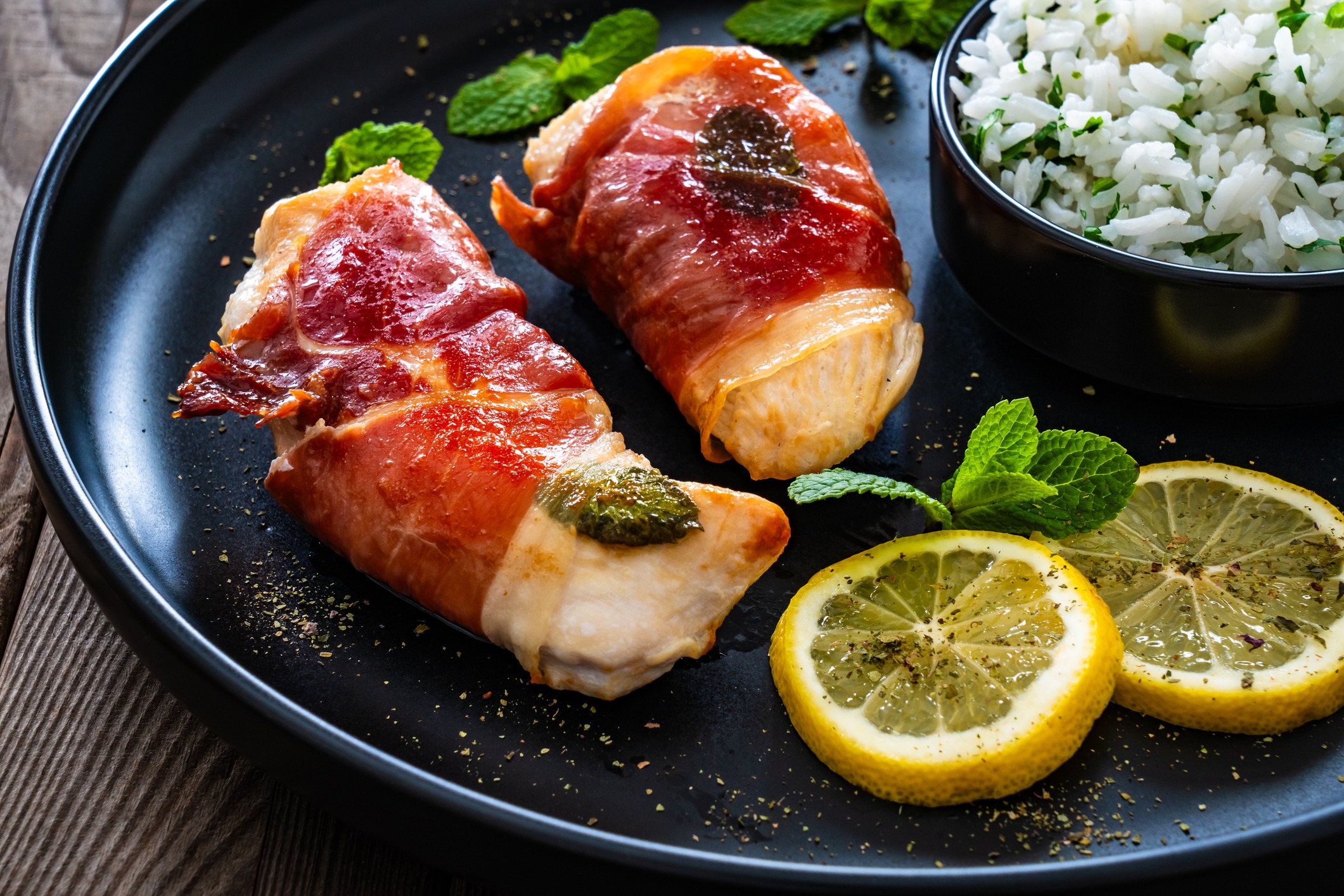
Saltimbocca is a traditional Roman dish featuring prosciutto wrapped around veal and sage leaves, cooked in butter and white wine. We’re using chicken as the main protein since it’s easier to find. “Saltimbocca” comes from the Italian phrase saltare in bocca, meaning “to jump into your mouth.” One bite and you’ll know why.
Ingredients
4 skinless, boneless chicken breast halves, butterflied and lightly pounded – about 6 oz each
8 large sage leaves
4 thin slices prosciutto, cut in half lengthwise
1/3 cup all-purpose flour, for dusting
2 Tbsp olive oil
4 Tbsp unsalted butter, divided
¼ cup dry white wine – like pinot grigio
¾ cup chicken stock
4 smashed cloves garlic
1 small shallot, minced
Salt and pepper
Fresh lemon slices for garnish
Directions
Season chicken breast halves with a little salt and pepper (go easy – prosciutto will give the dish plenty of salt). Put two sages leaves on each one and carefully wrap prosciutto slices around, pressing as you go and using toothpicks to make sure the prosciutto stays in place.
Place flour on a plate and dredge chicken. Set dredged chicken aside on another plate.
In a large skillet over medium-high high heat, add olive oil and 2 Tbsp butter. Add two wrapped breasts, turning as prosciutto gets crispy. Cook until nearly cooked through, turning as prosciutto shrinks and gets crispy – about 4-6 minutes.
Transfer chicken to a plate and repeat with remaining pieces.
Pour off excess fat. Add garlic and shallot, cook 2 minutes. Add wine, deglazing pan by scraping off the bits. Reduce wine by half, about 2-3 minutes. Add stock and bring to a boil. Cook/reduce by half – about 3-4 minutes. Add in butter and stir/swirl to emulsify sauce. Remove garlic.
Add chicken back to skillet and simmer over moderate heat until chicken is fully cooked through, about 2-3 minutes more or as needed to reach 165° internal temperature. Adjust salt and pepper. Transfer chicken to plates and pour sauce on and around before serving. Garnish with lemon slices and serve with your choice of side.
If you’re wondering how to get more wine and chocolate into your savory creations, here’s a recipe including a creative sauce using both. When it comes to savory dishes, chocolate is a bit player that helps pull all the flavors together instead of the star of the show. You want to use just enough to balance the other ingredients.
Learn more about chocolate’s place in cooking by checking out our The Union article.
Ingredients
3 Tbsp olive oil, divided
1 medium white onion – ½ minced and ½ sliced into rings
½ medium red pepper, diced
2 cups water
1 tsp Better than Bouillon
1 cup green lentils, well rinsed
4 garlic cloves, minced – divided in half
1 bay leaf
½ tsp ground cumin
¼ tsp cocoa powder
¼ tsp chili powder
1/3 cup red wine
½ cup ketchup
1 tsp soy sauce
½ tsp Worcestershire sauce – vegan if desired
1/8 tsp liquid smoke, or smoked paprika
2 Tbsp brown sugar
1 Tbsp apple cider vinegar
Salt/pepper to taste
4 – 6 hamburger buns
4 – 6 leaves lettuce
Directions
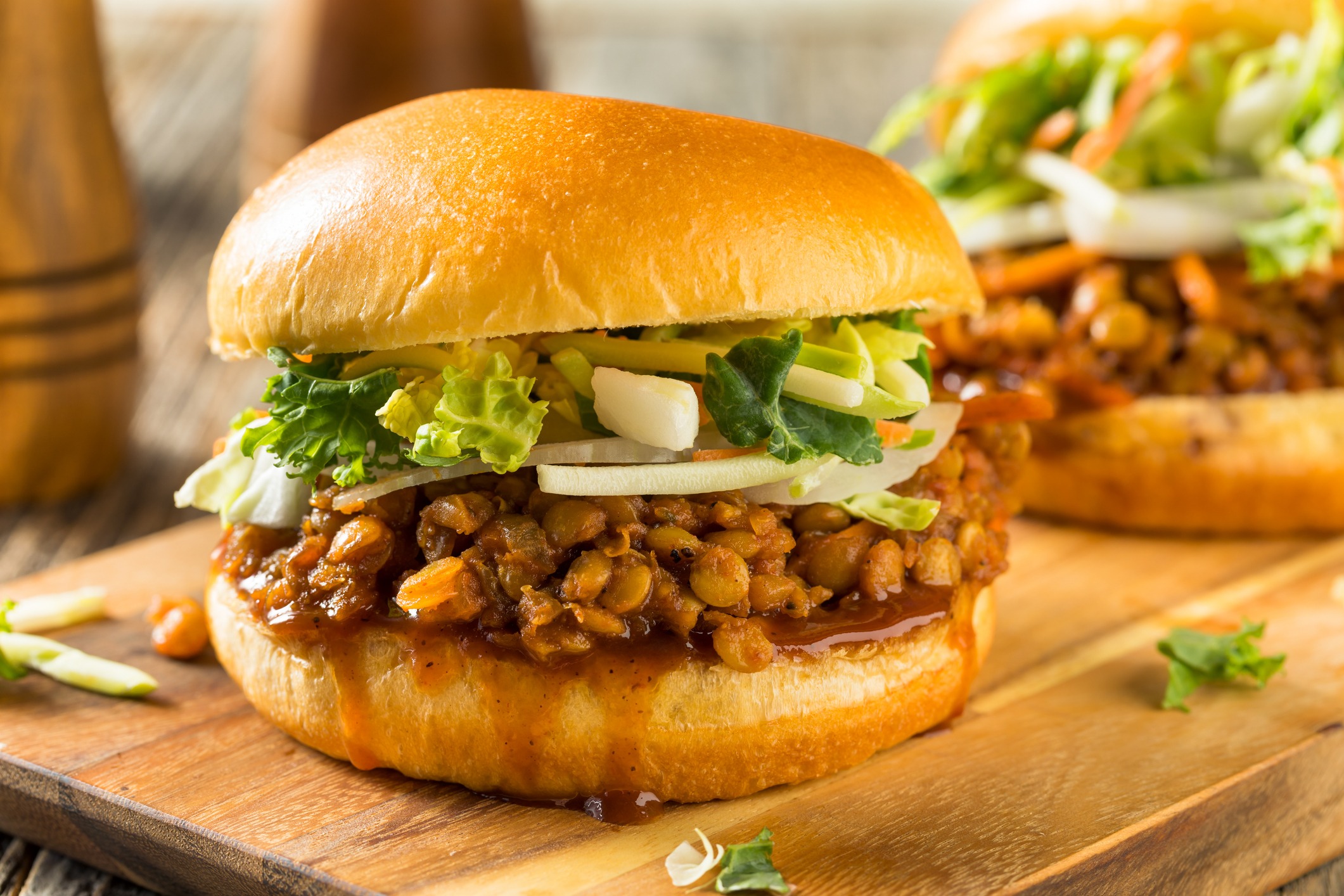
To a small saucepan, add 2 Tbsp olive oil, minced onion and red pepper. Cook until softened, about 4 minutes. Add water, 2 cloves minced garlic, bay leaf, Better than Bouillon and lentils. Bring to a low boil, stir. Reduce heat and simmer uncovered for about 20-25 minutes, or until tender. Set aside to drain, removing bay leaf.
Heat 1 Tbsp olive oil in a saucepan over medium heat. Add 2 cloves minced garlic, cumin, cocoa powder and chili powder and stir for 1 minute.
Add red wine and simmer 2 minutes. Whisk in ketchup, soy sauce, Worcestershire and liquid smoke/smoked paprika and simmer 2 minutes more.
Remove from heat. Stir in brown sugar and vinegar and let cool slightly. Add sauce to lentils to achieve desired “sloppiness.” Serve scoops of sauced lentils onto toasted burger buns, garnished with lettuce leaves and sliced onion.
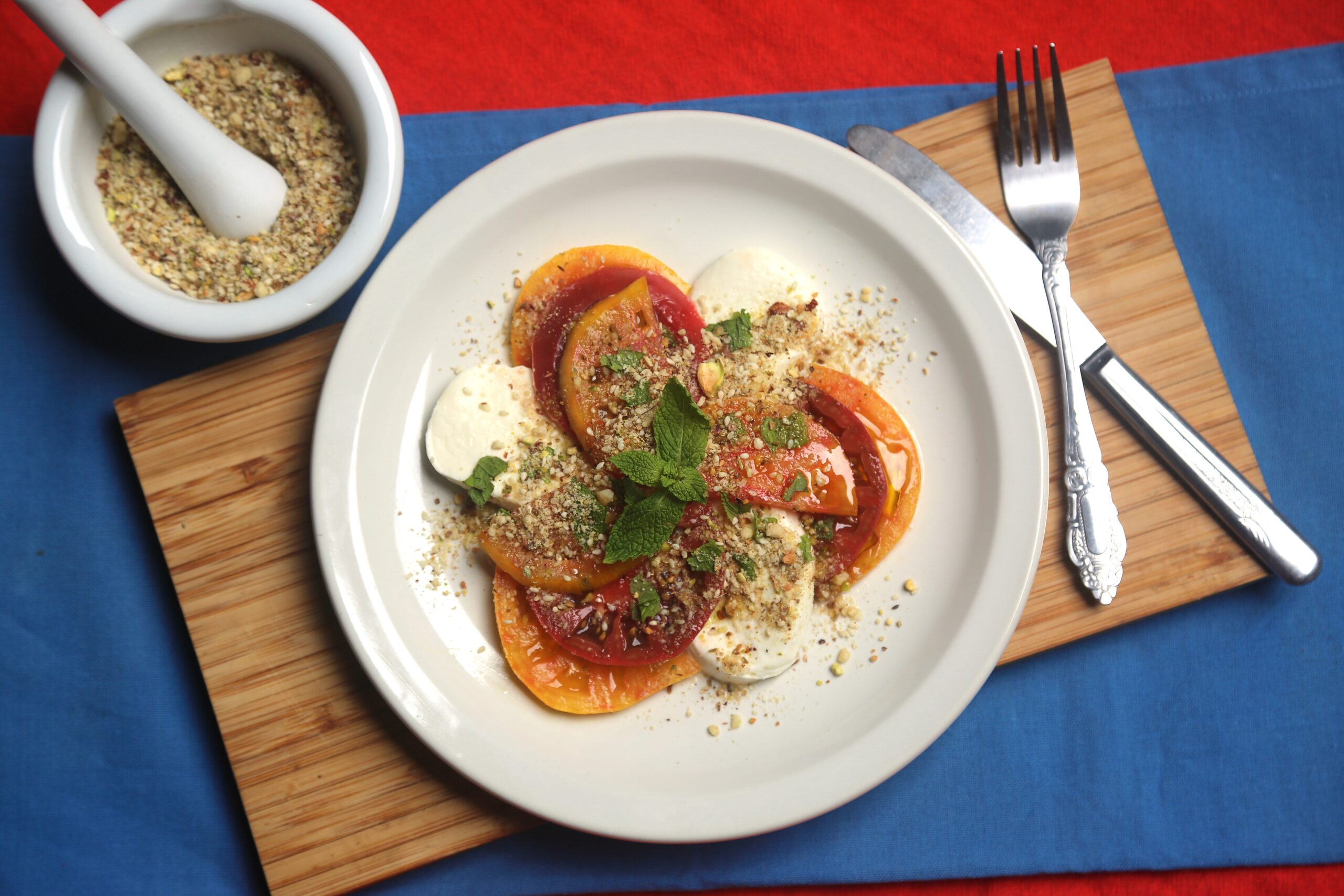
Here’s a recipe inspired by the classic tomato caprese salad – with a twist – using dukkah (pronounced doo-kah), It’s a versatile centuries-old spice blend with Middle Eastern origins that you can use to crust proteins like fish or chicken, stir into soup, or top a salad – like we do here.
Ingredients
Dukkah:
1/3 cup combined unsalted shelled pistachios, unsalted raw hazelnuts and almonds
2 Tbsp hulled sesame seeds, lightly toasted
1 ½ tsp fennel seeds
1 tsp coriander seeds
½ tsp cumin seeds
Pinch cayenne pepper
1 tsp kosher salt
Salad:
1 ½ pounds heirloom tomatoes, sliced into rounds ¼ inch thick
1 pound fresh mozzarella, sliced
2 Tbsp fresh mint, hand-torn into small pieces
2 garlic cloves, minced
1 small shallot, finely chopped
Juice of 1 lemon
1/3 cup extra virgin olive oil
Salt/pepper to taste
6 Tbsp dukkah, or more to taste
Directions
Make Dukkah: Heat a medium skillet over medium-low heat. Add nuts and toast about 2-3 minutes, stirring continuously, until lightly browned. Transfer to a food processor.
In same skillet, toast cumin, fennel and coriander seeds for about 1 minute until they release their scent. Remove seeds from skillet and allow to cool a few minutes. Add to food processor.
Add sesame seeds, salt and cayenne to food processor. Grind until spices look like coarse sand, some nut chunks can be as big as 1/8 – ¼ inch.
Make sure dukkah is fully cooled. Store in airtight container in a dry place for up to 3 weeks.
Note: You can also use a mortar and pestle to make dukkah.
Make salad: In a small bowl, combine garlic, shallot, lemon juice and several pinches salt. Add olive oil in a steady stream while whisking to combine. Set aside.
Arrange tomato and mozzarella slices slightly overlapping on a large serving plate or four smaller individual plates. Drizzle with dressing. Sprinkle on dukkah and fresh mint.
There’s nothing like a cheese plate to get everyone in a festive mood, even on the go! Whether you’re camping, road-tripping or spending time at the beach, a cheese plate is always a welcome snack.
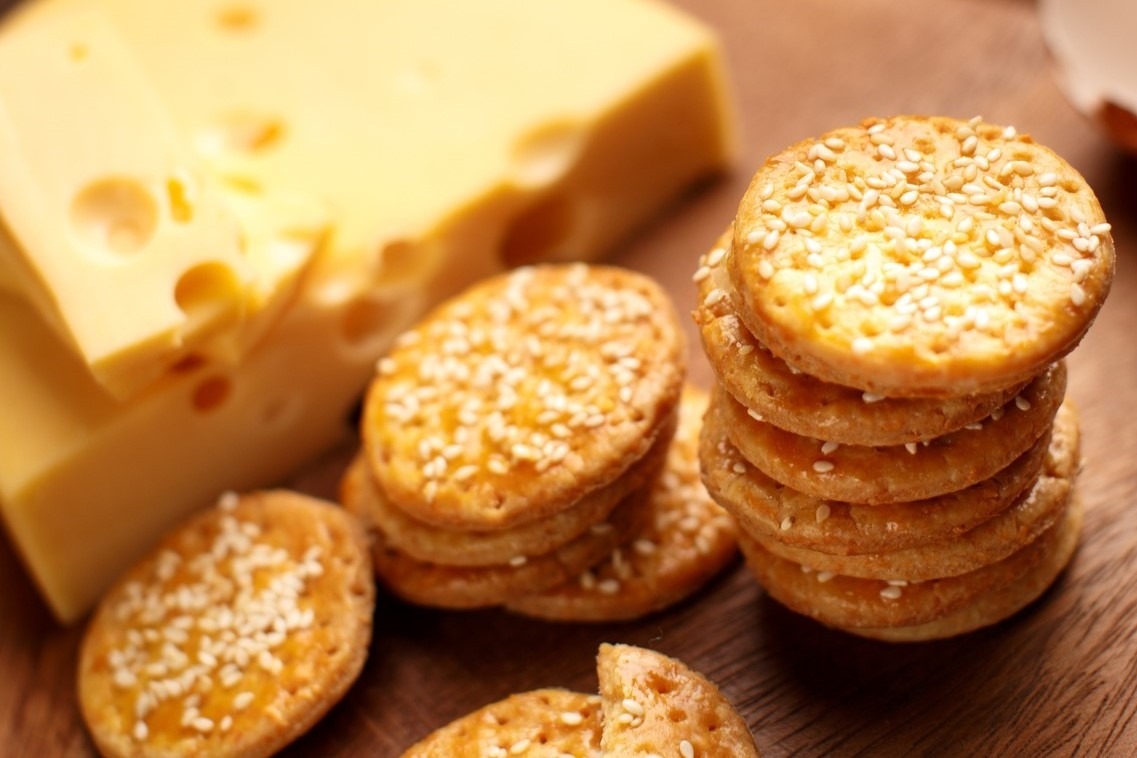
Here’s a great recipe for cheesy, homemade crackers that’ll go great with your movable feast – crispy and delicious!
Ingredients
8 oz finely shredded cheese – mix of Toma, Asiago and Parmesan
1 cup all-purpose flour, plus more for kneading
½ cup fine semolina flour (we like Bob’s Red Mill)
1 Tbsp cornstarch or 2 tsp arrowroot starch
½ – ¾ tsp kosher salt, divided
½ tsp garlic granules
¼ tsp pepper
½ cup cold unsalted butter, ½” pieces
4 Tbsp water, divided
1 egg, plus water for egg wash
Sesame seeds for sprinkling
½ cup toasted pinenuts, cooled and chopped
Directions
In a medium sauté pan or iron skillet over low-medium heat, put semolina flour in an even layer and warm until it smells toasty. Swirl/stir as needed for even toasting. Remove from pan and set aside to cool slightly, about 10 minutes.
Process cheese, flour, semolina, corn or arrowroot starch, salt, garlic granules and pepper in a food processor until combined, about 5 seconds. Add butter and process until mixture resembles wet sand, about 20 seconds. With processor running, add 3 Tbsp water through food chute; process until dough forms a ball, 10 to 15 seconds.
Remove dough from food processor and place on lightly floured surface. Flatten slightly and place pine nuts on top. Fold dough over everything and knead slightly to evenly incorporate without overworking.
Shape dough into two even 6-inch logs, about 1 3/4 inches in diameter. Wrap logs individually in plastic wrap; chill for 1 hour – 2 days.
Preheat oven to 350° with oven racks in upper and lower thirds. Line 2 baking sheets with parchment paper.
In a small bowl, beat egg and add 1 Tbsp water and a pinch of salt. Mix thoroughly to create egg wash.
Unwrap logs, slice into 1/8-¼ inch rounds. Place dough rounds ½ inch apart on prepared baking sheets. Using a fork, make a few holes in each one. Brush lightly with egg wash and sprinkle with sesame seeds.
Bake until edges are golden brown, about 13-15 minutes, rotating baking sheets between oven racks and front-to-back halfway through baking time. Cool crackers on baking sheets 5 minutes then transfer to wire rack to cool completely – 15 minutes more.
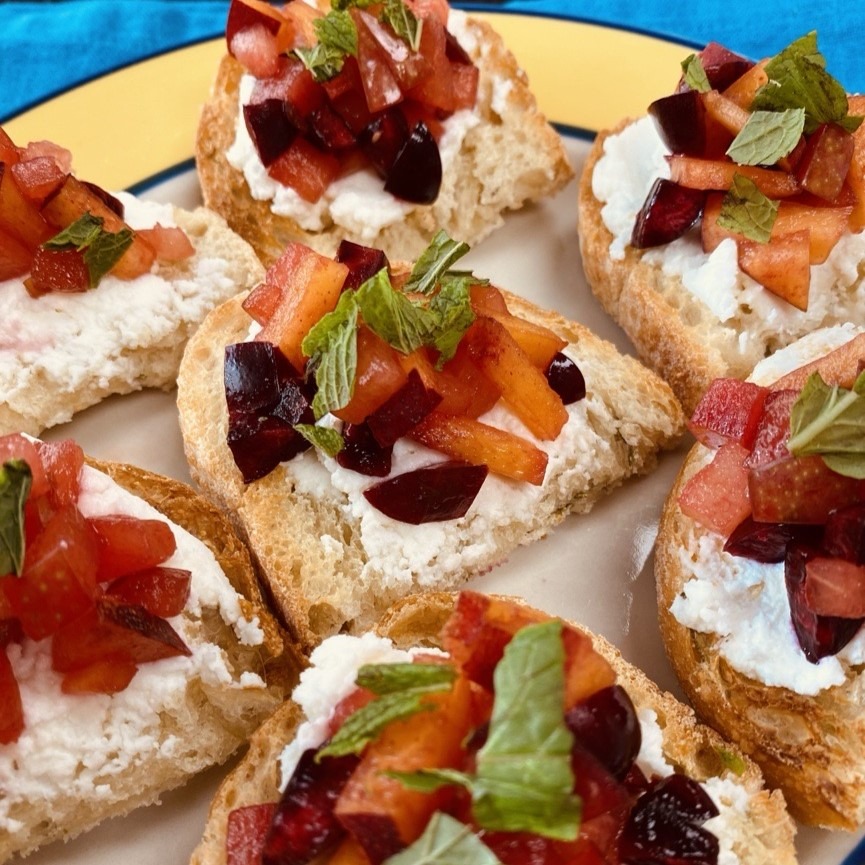
Stone Fruit Crostini with Whipped Ricotta and Feta
24 servings
Here’s a nice, light combo with a tantalizing twist of sweet and savory that makes the most of summer’s bounty of stone fruits. Choose fruit that’s not too mushy or overripe.
Ciabatta with herbs or olives baked right in adds another dimension to the flavor mix.
Raise a toast to summertime!
Learn more about crostini in our The Union article.
Ingredients
1 loaf rosemary or kalamata ciabatta
3-4 Tbsp olive oil
Salt
8 oz feta cheese, crumbled small
4 oz ricotta cheese
2 pluots
1 large nectarine
12-14 cherries
Juice from ½ lemon
2 Tbsp mint leaves, hand-torn into small pieces
Salt/Pepper to taste
Directions
Preheat oven to 400°. Slice bread into ½ inch thick slices. If using bread larger than a baguette, cut slices in half so the size is good for 1-2 bites. Brush both sides of bread with olive oil and season with salt and pepper.
Bake 6-8 minutes until lightly toasted and crisp, flipping once at the 3–4-minute mark. Remove from oven and allow to cool.
Add feta to a food processor and pulse to crumble into very small pieces. Scrape down the bowl and add ricotta. Blend until combined and fluffy. Taste salt level and adjust/re-blend as needed.
Finely dice fruit and place together in a medium bowl. Add a squeeze of lemon juice and gently fold ingredients together. Wait a few minutes for flavors to meld, then taste and adjust lemon juice. Place fruit in a strainer to drain excess liquid before assembling crostini.
Place crostini on serving plate and one by one spread on a layer of whipped cheese. Top with stone fruit mixture and pieces of mint.
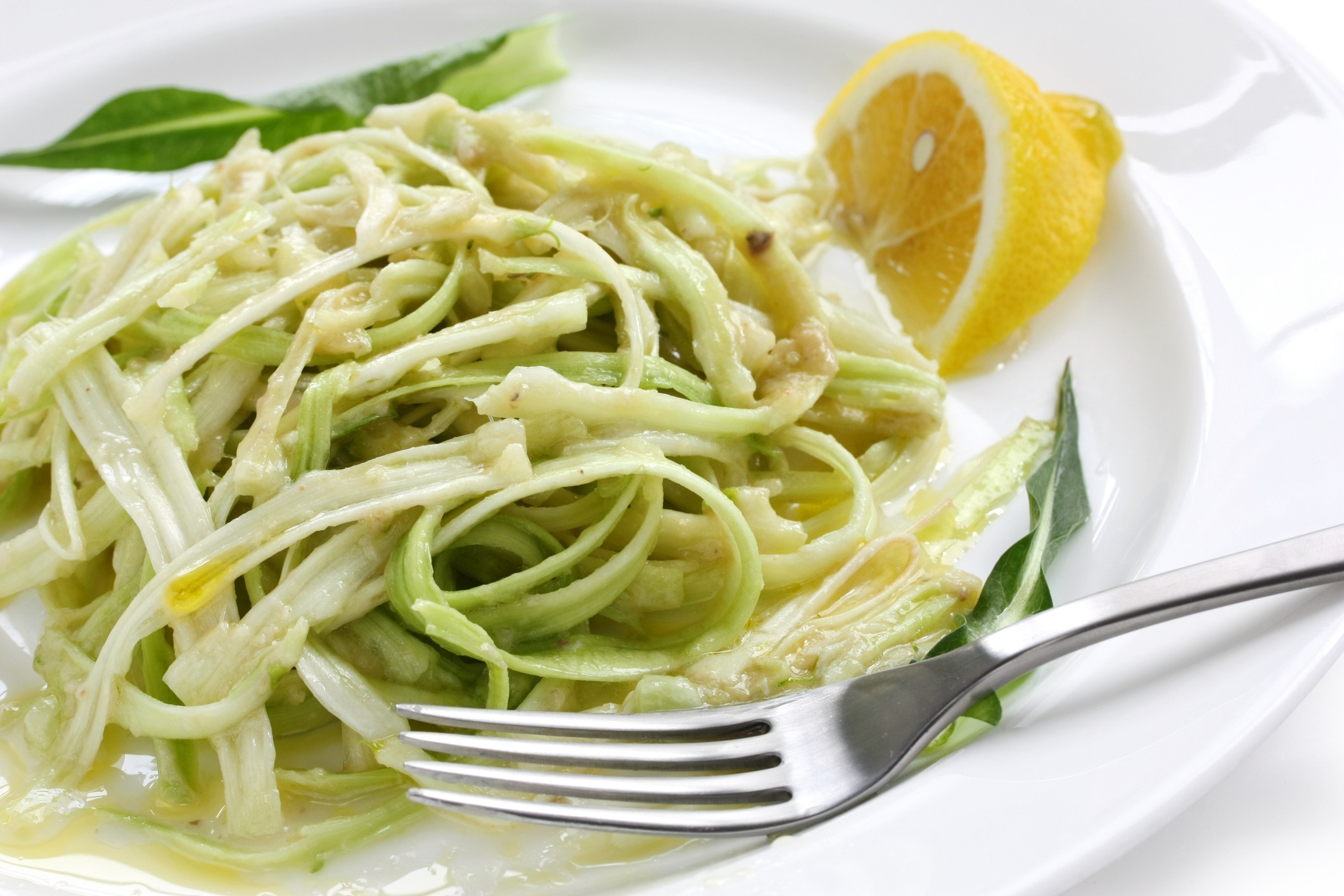
Puntarelle is the most interesting-looking member of the chicory family – think escarole, endive, radicchio – but with long pointy leaves encircling hollow, pointed tubes with a bitter but pleasant flavor Italians call amarognolo (ah-mahr-own-YOlo).
The tubes are traditionally sliced thinly and enjoyed raw as a salad with an anchovy-based dressing similar to what you’d put on a Caesar salad. This version was inspired by a recipe from a San Francisco firehouse. If you want to make your puntarelle salad “alla California,” use the optional avocado and lemon for a simple, guac-like base to top with the salad.
No puntarelle? Thinly-sliced endive is a good substitute.
Ingredients
2 Tbsp fresh lemon juice
2 Tbsp Dijon mustard
1 Tbsp red wine vinegar
1 Tbsp Worcestershire sauce
3-4 cloves garlic
1.5 oz jar anchovy filets in oil
¼ cup grated Parmesan cheese
1 cup olive oil
Salt/pepper to taste
1 head puntarelle (about 1 lb)
½ lemon
Optional: 1 avocado, ½ lemon
Directions
Cut bottom off puntarelle and remove large (more bitter) outer leaves to be used for something cooked like a soup or sauté.
Take a small tube and, slicing from the open end towards the pointy top, cut into thin ribbons that are held together by the top. Alternately, julienne tubes into separate strips.
Place puntarelle strips in a bowl with cold water, some ice cubes, and the ½ lemon (squeeze slight to release juice into water). Let rest for an hour, taste for bitterness. If you want less bitterness, change water and continue soaking for another ½ hour. This will also cause the cut tubes/strips to curl.
While puntarelle soaks, make dressing: Add lemon juice, Dijon, vinegar, Worcestershire, garlic, anchovy filets and their oil, Parmesan and olive oil to a blender and blend until creamy. Adjust taste with salt/pepper.
Drain puntarelle and dry in a salad spinner
Optional avocado layer: Mash avocado with juice from ½ lemon and salt/pepper to taste. Thinly spread a dollop of mashed avocado onto serving plates. Top with dressed puntarelle divided into equal portions.
For a vegan version, sub 1 Tbsp chopped capers for anchovies and use a vegan Worcestershire sauce. To maintain texture, stir capers into blended dressing right before adding to puntarelle.